Group Creative Therapy Sessions
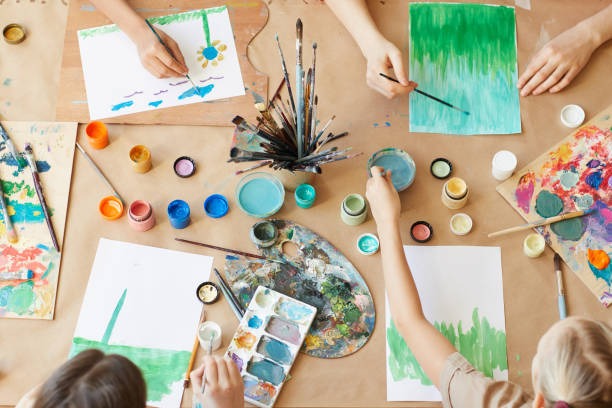
Group creative therapy sessions provide students with the opportunity to explore emotions, build social skills, and develop resilience in a safe and supportive group environment. These sessions are designed to complement individual support, promoting peer connection, collaboration, and shared learning experiences.
Group therapy allows students to practice communication, empathy, and emotional regulation in real-time, while benefiting from the guidance of a trained creative therapist.
The Importance of Group Support
Many students experience emotional, social, or behavioural challenges that can affect their engagement and wellbeing at school. Group sessions provide a structured, safe space for students to learn from one another, develop positive relationships, and practice coping strategies.
In Australia, research highlights that peer support and social learning are key factors in improving young people’s mental health, and that early intervention within schools can significantly improve students’ emotional resilience and academic engagement.
Why Group Therapy Works
Groups offer a natural social environment where emotional challenges, peer dynamics, and social behaviours can be explored in the moment. This allows participants to practise emotional regulation, communication skills, empathy, and problem‑solving alongside peers who are facing similar challenges, benefits that are difficult to replicate in individual therapy alone.
Adolescence is a developmental period where peer relationships and social learning are especially important, and group settings provide a structured context for building confidence, self‑esteem, and interpersonal skills. Participants often emerge feeling understood and supported, which can reduce isolation, strengthen resilience, and enhance coping strategies.
Group therapy can also be more accessible and efficient, allowing more students to receive support within a school’s existing well-being framework, which is particularly valuable given the rising demand for youth mental health services.
Group therapy is highly effective for young people, with meta-analyses showing that children and adolescents in group treatment are better off than 73% of those not receiving treatment. Another study confirms trauma-focused group art therapy significantly reduces PTSD symptoms in adolescents.
Benefits for Schools
Group creative therapy sessions provide value not only for students, but for the wider school community:
Develops students’ emotional regulation, social skills, and resilience
Fosters positive peer relationships and collaboration
Supports engagement and participation in learning
Reduces behavioural challenges and classroom disruption
Complements individual therapy and wider wellbeing initiatives
By offering structured group interventions, schools can create supportive, collaborative environments where students learn to manage emotions and interact positively, enhancing overall well-being and learning outcomes.
Contact
Reach out to discuss your school's needs
Phone
izzylloyd@thirdspacecreativetherapies.com
+61 405 012 374
© 2025. All rights reserved.